About the Coalition
Who we are, what we are trying to do, and where the Overline came from.
We are Atlantans who think the Beltline should carry people, and who got tired of waiting for someone else to figure out how.
The Coalition was constituted in 2024. We are not a developer, a contractor, or a transit agency, and we will not build or operate anything. What we do is the unglamorous part: we commission the engineering, hold the meetings, answer the mail, and try to make the case in public that the Beltline is worth connecting.
What we want
One line, running the length of the Beltline, that works for people who live here. Not a demonstration project, not an attraction, not a pilot that quietly ends after a year. A standard fare. All-day service. Stations where people already are.
Everything we have worked out is published in the plan, including the parts that have changed since we started, and every letter we have sent about it is published in the correspondence, including the ones nobody answered.
Who is here
- Dana Whitfield, Executive Director
- Arturo Peña, Director of Engineering
- Lorraine Ash, Community Engagement
- T. J. Boland, Records and Research
Our staff is four people and a part-time bookkeeper. Our coalition is nineteen member organizations, a few hundred volunteers who have knocked on doors or stood at a folding table, and several thousand people who have signed the letter. If we are slow answering the phone, the first number is why. If we are still here in five years, the rest of it is why.
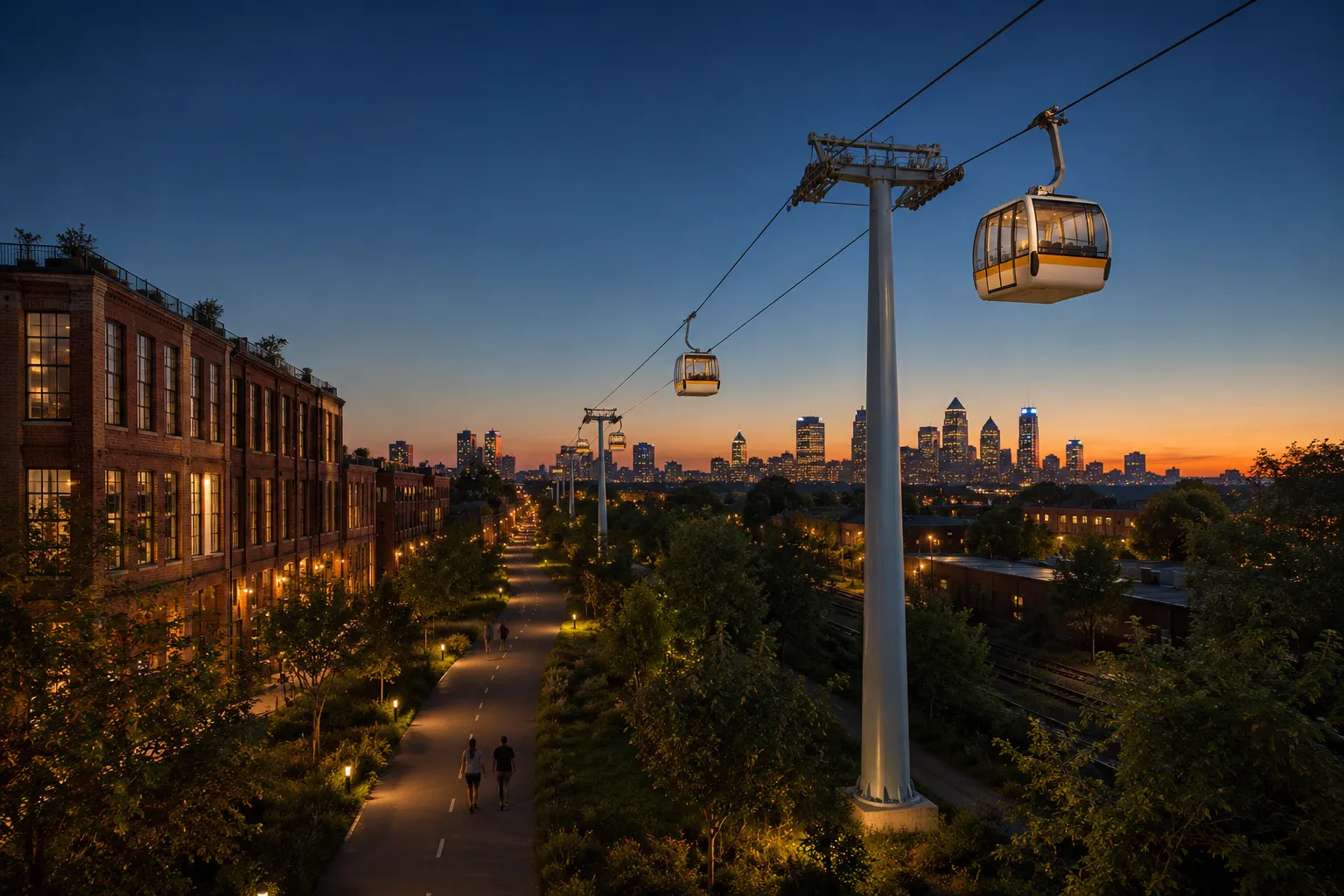
Where this came from
The Coalition takes its name and its lineage from the Georgia Ropeway Association, which was organized in Atlanta in 1927 to advance an aerial alignment of the same corridor, and which is not known to have met after 1931.
We did not set out to become anyone’s successor. In 2023 two of us filed a records request with a county office, expecting to spend an afternoon confirming that the 1927 survey was a rumor. It was not a rumor. The material came back thinner than the inventory said it should be, and answering that discrepancy has taken rather longer than the afternoon we set aside for it.
Most of what survives amounts to a single document box. We have published a collection inventory so that anyone who wants to look at it can, and so that nobody has to take our word for what is in there, or for what isn’t.